
Sandtray Therapy for Adults and Couples in Bellingham, WA
Some of what we carry cannot find its way into words.
What is Sandtray Therapy?
We can understand our experiences intellectually — trace the history, name the patterns, articulate what happened and why — and still find that something remains untouched. Unreachable by language alone.
This is where sandtray therapy comes in.
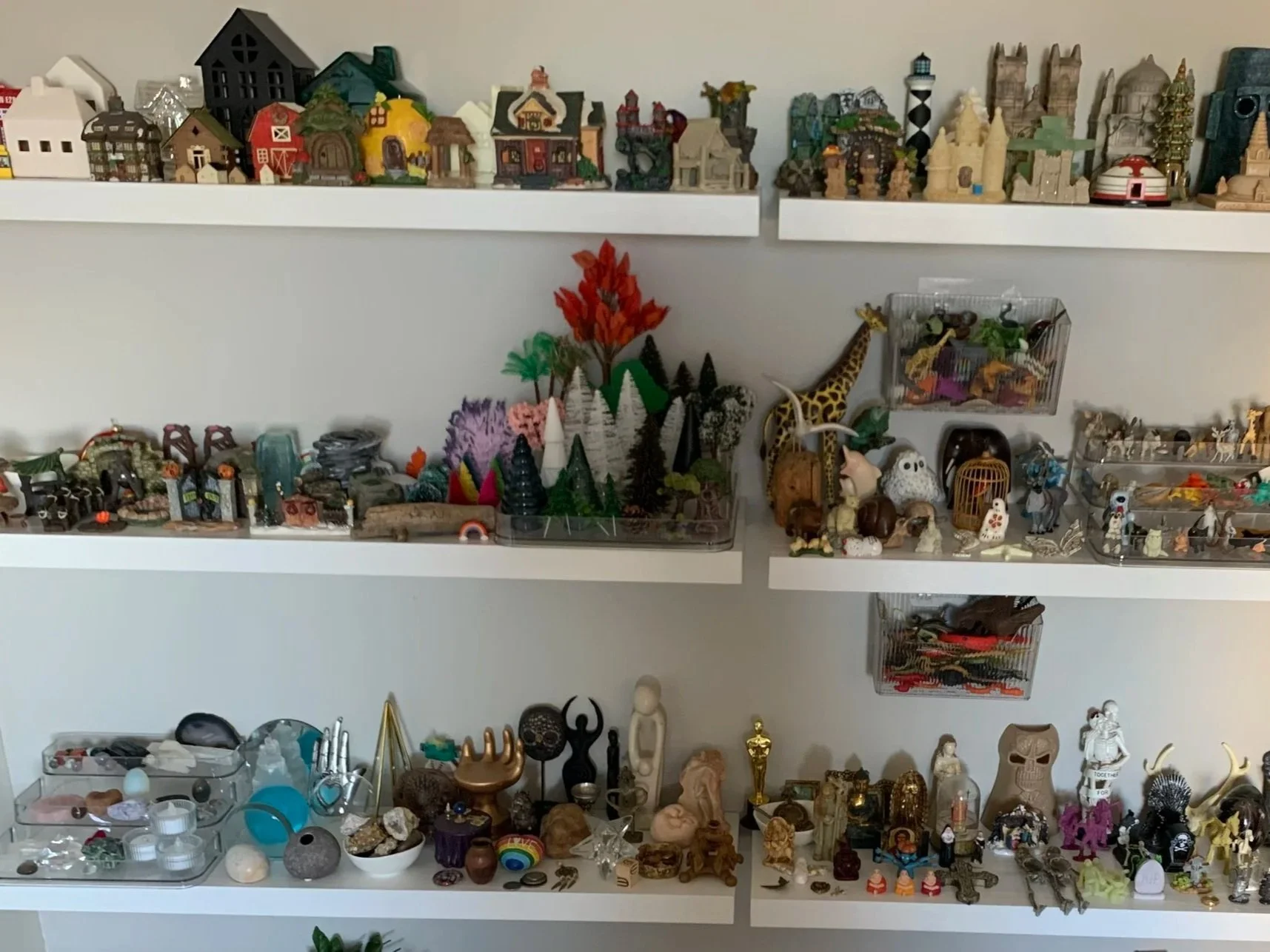
Sandtray is an experiential, symbolic therapy in which you use a tray of sand and a collection of miniature figures — people, animals, structures, natural objects, mythical creatures — to create a three-dimensional scene that represents your inner world, your relationships, or whatever is alive for you in this moment. It is not art therapy, and it is not play in the casual sense of the word. It is a way of externalizing what lives inside — giving form to feelings, dynamics, and experiences that the thinking mind alone cannot fully access or shift.
As a Registered Play Therapist with advanced training in sandtray, I bring this modality into my work with adults and couples as a powerful experiential tool. What often surprises people is how much emerges in the tray that they did not know was there — and how differently they feel after giving it a place to exist outside of themselves.
Sandtray for Individuals
For individual adults, sandtray can be a gateway into material that talk therapy has not been able to reach — early experiences, somatic memories, relational patterns, metaphors, or parts of the self that have never quite had a voice. It is particularly powerful for people who are highly verbal and intellectual, because it bypasses the part of the mind that is very good at explaining things and goes somewhere more honest and more felt. Similar to how dream interpretation can help us to understand our waking life in new ways, looking at symbols and themes in sandtray can access unconscious material and allow us to explore it in a new way.
It can also be a grounding, regulating experience — something about working with the sand itself, the weight and texture of it, that settles the nervous system and creates the conditions for deeper work.
Sandtray for Couples
When used with couples, sandtray becomes something remarkable. Each partner creates their own scene — or they create one together — and what emerges in the tray often illuminates the dynamics between them more vividly than words ever could. Partners who have been trying to explain themselves to each other for years sometimes find, in the tray, a way of finally being seen.
It can reveal how each person experiences the relationship, what they are longing for, what they are protecting against, and where there is more possibility than either of them realized. It can create moments of genuine mutual understanding that can shift something in the room.
Who This Is For
Sandtray is not for everyone — and that is okay. But it tends to resonate deeply with people who are:
Curious and open to experiential approaches
Feeling stuck despite years of insight-oriented work
Highly intellectual or verbal and sensing that something is still out of reach
Drawn to somatic, embodied, or creative ways of knowing themselves
Processing experiences that predate language or that feel too big or too tender for words alone
You do not need to know what you want to put in the tray. You do not need to have a plan. The process itself has a wisdom to it — and I will be with you every step of the way.
If you are curious about whether sandtray might be right for you or your relationship, I invite you to reach out for a free consultation.
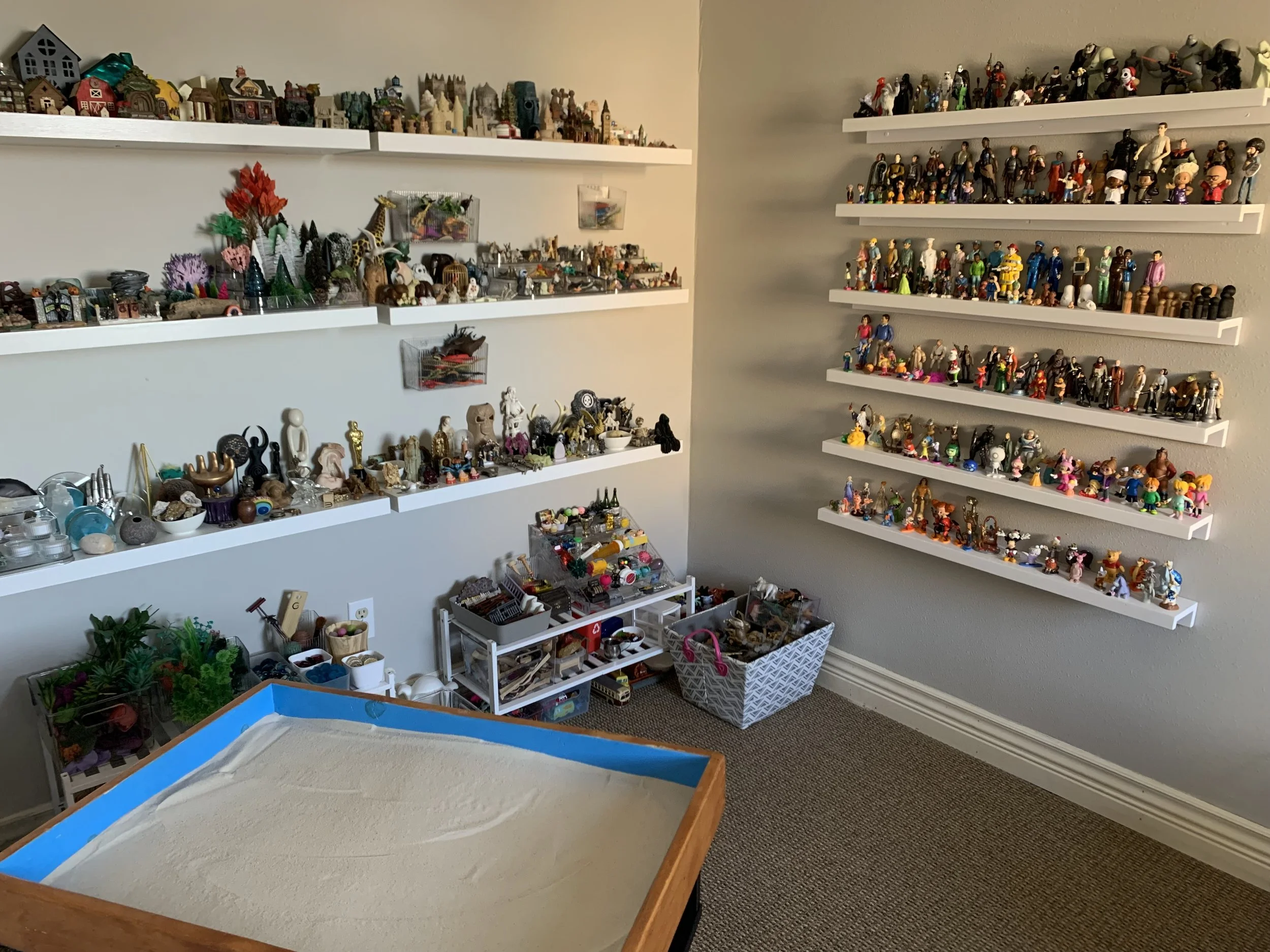
Sandtray with figures in my office.